Loyalty Incentives Meet Real-Time Jackpots in Multi-Game Casino Platforms
Written by Riley Lehmann · Oct 28, 2026

Loyalty Incentives Meet Real-Time Jackpots in Multi-Game Casino Platforms
Multi-game casino environments combine slot machines, table games, and electronic variants where loyalty programs track player activity across all offerings and real-time jackpots update continuously based on wagers placed anywhere in the network. These systems operate through centralized servers that pool contributions from diverse game types while loyalty tiers adjust reward multipliers or access levels without altering core random number generation.
Mechanics of Real-Time Jackpot Networks
Real-time jackpot systems calculate contributions from every eligible bet in connected games and display growing prize pools that reset after each win, with updates occurring in seconds across terminals. Operators configure these networks so that slots, video poker, and some table game variants feed into shared pots, while separate seed amounts maintain minimum thresholds set by regulatory standards in various jurisdictions. Data from the American Gaming Association shows that such pooled mechanics accounted for a measurable share of total handle in monitored markets during 2025, with October 2026 figures reflecting continued expansion in linked environments.
Loyalty Program Structures and Player Tracking
Loyalty frameworks assign points based on coin-in or time spent, then segment participants into tiers that unlock benefits such as bonus entries into jackpot drawings or accelerated point accumulation toward prize redemptions. Integrated software records every transaction across game categories so that activity on one machine type influences eligibility for rewards tied to another, creating unified player profiles that update in real time. Canadian Gaming Association reports indicate that tiered systems frequently link to progressive features by granting higher-tier members additional chances at secondary jackpot triggers without changing base game probabilities.
Integration Patterns Across Game Types
In practice, loyalty incentives interact with jackpot mechanics through several defined pathways. Higher tiers may receive percentage boosts applied to any jackpot win from linked games, while point multipliers increase faster when players engage with progressive titles. Some platforms route daily drop events exclusively to loyalty members who maintain active status, and these drops draw from the same real-time pools that accumulate from standard wagers. Observers note that such linkages require precise accounting to ensure contributions remain proportional across all participating games, preventing any single category from disproportionately funding shared rewards.
Additional configurations allow loyalty points to convert directly into entries for exclusive jackpot phases that run alongside primary progressives, with results determined by separate algorithms. Multi-game operators often synchronize these features so that a single card swipe or account login activates both tracking and jackpot eligibility across the floor or online lobby simultaneously.
Technical Requirements and Data Flow
Backend systems rely on application programming interfaces that exchange information between player management databases and jackpot controllers every few milliseconds. When a loyalty member places a qualifying bet, the system records the contribution, applies any tier-specific multiplier to point earnings, and adds the base amount to the appropriate jackpot meter without delay. Research published through the University of Nevada Reno gaming laboratories has examined latency thresholds in these setups, confirming that delays exceeding established limits can affect player perception of fairness even when underlying mathematics remain consistent.
Security protocols encrypt all data transfers between terminals and central servers while audit logs capture every adjustment to jackpot values or loyalty balances. Regulatory frameworks in multiple regions mandate regular testing of these interfaces to verify that loyalty modifications do not influence random outcomes in jackpot determinations.
Operational Examples from Different Markets
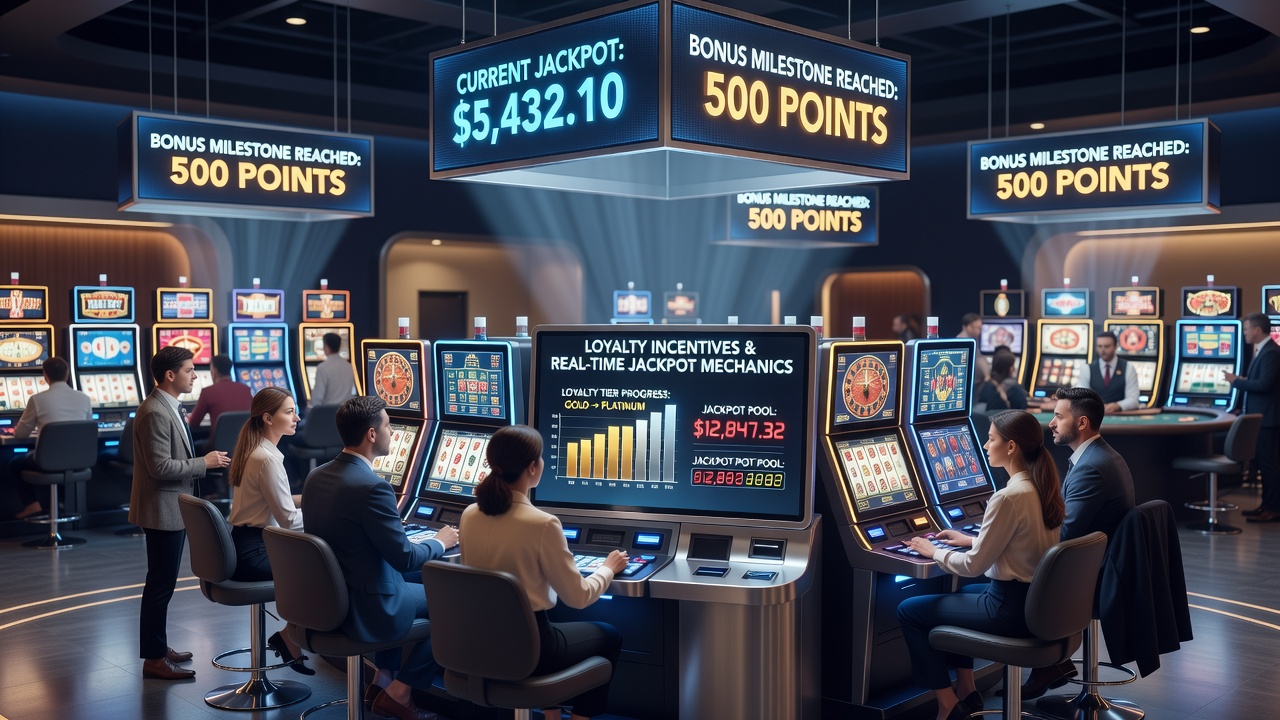
One documented approach appears in Australian venues where loyalty cards feed into statewide progressive networks covering both land-based and online terminals, with tier status determining eligibility for supplementary prize pools that reset on fixed schedules. European operators have implemented similar models where points earned from table games contribute toward jackpot entries on slot networks, using cross-game multipliers that activate automatically once thresholds are reached. In October 2026 several North American properties reported expanded use of real-time dashboards that display both current jackpot levels and projected loyalty rewards for individual sessions, allowing players to monitor combined progress without switching interfaces.
Conclusion
The interplay between loyalty incentives and real-time jackpot mechanics in multi-game settings centers on synchronized data systems that track activity, apply tier adjustments, and update prize pools across diverse game categories. These arrangements rely on established technical standards and regulatory oversight to maintain separation between reward calculations and game fairness. Available figures from industry associations and academic reviews continue to document adoption patterns without indicating uniform outcomes across all implementations.